Ice Cream Cone Dripping
A Summer Staple That Melts Into Your Best-Selling Booth Display
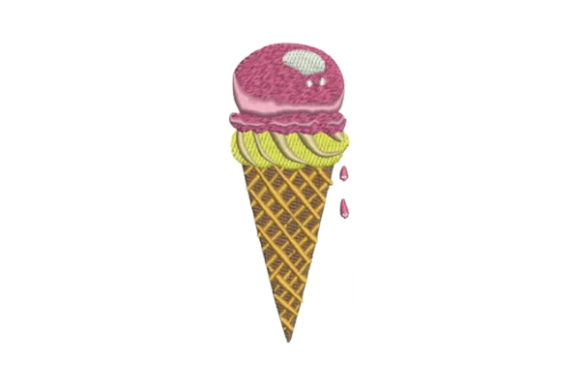
As an embroidery designer who’s prepped over 200 craft fair booths—from downtown pop-ups to rural farmers’ markets—I’ll tell you straight: Ice Cream Cone Dripping lands with instant visual joy. It’s bold, playful, and unapologetically summery—not dainty or minimalist, but confidently cute with a wink of humor. The title alone triggers nostalgia and appetite, and that’s half the battle won before the first stitch fires. For handmade product sellers, this isn’t just another dessert-themed embroidery file—it’s a conversation starter, a photo magnet, and a natural fit for warm-weather merch that moves.
Where Ice Cream Cone Dripping Shines on Real Craft Fair Products
This machine embroidery design thrives where personality meets practicality. On a heavyweight cotton tote bag? Perfect—centered above the pocket or scaled large across the front, it reads clearly from six feet away. On a chef-style apron? Ideal for the lower left corner or chest pocket flap—small enough to feel intentional, big enough to delight. For tea towel embroidery, it works best as a single focal motif near the hem, especially on light or medium-toned linens; avoid overly textured terry or heavy waffle weaves unless you reinforce stabilizer.
Embroidered patches made from Ice Cream Cone Dripping sell like scoops on a heatwave—especially when backed with iron-on adhesive and offered in sets of three (vanilla, strawberry, mint chip). Caps? Use it on the front panel only if your hoop size allows clean clearance around the curve—test first on scrap fabric with your cap frame. Small fabric pouches and pillow covers benefit most when the design is sized between 3.5”–4.5”: large enough to read, small enough to preserve detail without crowding.
For Etsy sellers and digital shops, this embroidery file translates beautifully into printable mockups—think flat-lay shots of a sun-bleached market bag beside a lemonade pitcher, or a stitched tea towel draped over a ceramic bowl. Its cheerful vibe lifts listings, increases dwell time, and supports higher perceived value for small shop products.
What Makes This Design Sell—And What Demands Extra Care
Ice Cream Cone Dripping earns its keep because it’s instantly legible at a glance. No decoding required. Customers recognize “ice cream” and “drip” in under two seconds—and that emotional shorthand drives impulse buys at craft fairs. It scales well: effective as a 2” accent on a patch or a 5.5” statement on a pillow cover. But here’s the fine print: watch the drip itself. If the file includes fine satin-stitched drips or tiny seed-stitched sprinkles, those details can blur on dark fabric or dense-weave towels. Tiny lettering (if included in any variant) will vanish below 2.25”. And thick fabrics—like duck canvas or quilted pouch linings—demand cutaway stabilizer and possibly reduced stitch density to prevent puckering.
Design Assets That Boost Buyer Engagement
- Visual appeal: Bright, joyful, and seasonally urgent—customers associate it with celebration, not clutter.
- Booth display strength: Pairs effortlessly with pastel signage, striped bunting, and real ice cream props (yes, bring the sprinkles).
- Handmade quality signal: When stitched cleanly, the curves and layered cone suggest craftsmanship—not clipart.
- Brand consistency: Fits seamlessly into dessert-themed collections alongside cupcake, popsicle, or lemonade designs.
- Product value lift: Turns a $12 tea towel into a $24 gift-ready item with clear summer storytelling.
Practical Embroidery Designer Notes Before You Stitch
Before cutting your first production run, do these five things:
- Test on scrap fabric that matches your final product—especially for textured tea towels or curved cap surfaces.
- Check thread contrast against your base fabric: white thread on ivory linen reads soft; neon pink on black denim pops—but may need denser coverage.
- Review spacing and stitch density in your embroidery software. Look for overlapping satin columns or tight fill areas that could cause thread breaks or fabric distortion.
- Confirm hoop size compatibility—if your largest hoop is 4” x 4”, scale down or split the design early. Don’t force-fit.
- Use the right stabilizer: tear-away for stable cottons, cutaway for knits or stretchy pouch fabrics, and fusible + tear-away combo for lightweight linens.
Always create at least one real mockup—not just a digital preview. Hold it in natural light. Walk ten feet away. Ask a friend, “What do you see first?” Then compare fabric colors side-by-side: oatmeal linen vs. navy twill vs. peach cotton poplin. Each changes how the drip’s texture reads. And crucially—verify commercial licensing before selling finished products. This is a digital embroidery file intended for resale use, but terms vary by seller. Don’t assume.
Why Ice Cream Cone Dripping Belongs in Your Next Batch
In a sea of florals and monograms, Ice Cream Cone Dripping stands out—not because it’s loud, but because it’s human. It invites smiles, sparks memories, and fits naturally into the rhythm of summer shopping: spontaneous, sweet, and full of light. For Etsy sellers juggling SEO and stitching, it’s a strong keyword anchor (“ice cream embroidery,” “summer tote bag design,” “handmade dessert patch”). For boutique makers building cohesive collections, it adds warmth without sacrificing polish. And for craft fair sellers watching foot traffic slow at 3 p.m.? This design is your secret scoop—the one that makes someone pause, point, and say, “I need that.”
It’s more than a dessert-themed embroidery file. It’s a mood, a moment, and a reliable craft fair product—when executed with intention, tested thoroughly, and placed where eyes land first.