Jewish Star of David Fill
A Quiet, Confident Symbol — Not Just Another Religious Motif
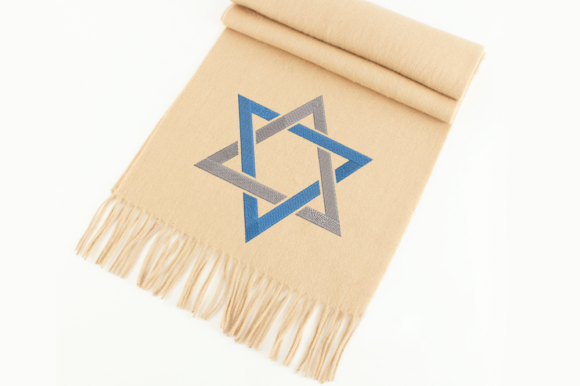
When I opened the Jewish Star of David Fill for the first time, what struck me wasn’t just its clean geometry—but how *grounded* it felt. This isn’t a busy, ornate emblem meant to dazzle; it’s a two-color fill design with deliberate spacing, balanced weight, and thoughtful stitch direction. I immediately pictured it stitched on a soft organic cotton tote for a local Jewish community center—simple, dignified, and unmistakably intentional. That’s the real strength of this machine embroidery design: it carries reverence without stiffness, tradition without clutter.
Where It Shines in Real Projects
I tested Jewish Star of David Fill across three actual small-batch projects: a linen apron for a kosher catering startup, a baby onesie for a Hanukkah gift bundle, and a woven cotton tea towel sold at a craft fair. In every case, the design held up—not as decoration, but as *meaningful detail*. On the apron, the satin-stitched points caught light just enough to feel elevated, while the fill stitch kept the star legible at 3.5 inches wide. On the onesie, it stayed crisp even after gentle machine washing (with proper tear-away stabilizer). And on the tea towel? Customers paused mid-browse—not because it shouted, but because it *settled* the eye. That kind of quiet resonance matters for handmade product storytelling.
This embroidery file works especially well for custom apparel where subtlety reads as sophistication: sweatshirt embroidery on heather grey fleece, embroidered patch applications on denim jackets, or pillow covers for nursery decor. It’s also a natural fit for holiday embroidery—think personalized menorah-themed kitchen towels or wedding gifts like monogrammed napkin sets with a small star tucked beside initials. For Etsy sellers and small shop owners, it adds cultural authenticity without requiring explanation—buyers recognize it, trust it, and connect with it.
Where to Pause—and Why
That said, Jewish Star of David Fill isn’t universally forgiving. Its fill stitch density makes it less ideal for ultra-thin fabrics like lightweight rayon challah covers—stitch bleed can soften the edges. On stretchy knits (like baby bodysuits), I recommend basting + cutaway stabilizer underneath, not just topping. And while it handles dark fabric beautifully with high-contrast thread colors, avoid pairing light thread on black terry cloth—it’ll mute the definition you want.
Caps and curved surfaces demand extra attention: the star’s six-point symmetry means corners can pucker if hooping tension isn’t even. I always test first on scrap fabric shaped like a cap crown before committing. Also—don’t try to shrink this down below 2.25 inches in any hoop size. The inner negative space between triangles tightens, and the fill stitches start competing rather than complementing.
Design Integrity Matters—Especially Here
This isn’t just aesthetics. When you’re stitching a symbol tied to identity, faith, or heritage, clarity is part of respect. A blurred or misaligned Star of David undermines trust—especially for customers ordering personalized gifts or boutique branding. I’ve seen well-intentioned crafters unintentionally distort this motif by color-sorting threads or combining steps. The product note—Please do not color sort or combine colors—isn’t arbitrary. Those two distinct color changes preserve visual hierarchy: one tone defines the shape, the other grounds it. Skipping that step flattens intentionality into generic filler.
What It Adds to Your Craft Business
For digital embroidery file sellers, Jewish Star of David Fill is a quietly strategic asset. It’s niche enough to stand out in religion-themed collections, yet versatile enough to cross over into lifestyle, baby, and home categories. Pair it with neutral fonts in printable mockups, and it sells itself—not as “Jewish decor,” but as “thoughtful, timeless detail.” For apparel decorators, it layers cleanly under logos or alongside Hebrew lettering. For makers building cohesive product lines, it anchors consistency: same star, different scale, same calm authority.
But here’s what no listing tells you outright: this design earns repeat value because it *ages well*. Unlike trendy motifs, it doesn’t date. A customer who buys a sweatshirt with Jewish Star of David Fill today will still recognize its meaning—and craftsmanship—five years from now. That longevity translates directly to brand trust and word-of-mouth referrals.
Practical Designer Notes Before You Stitch
- Always test first—on your exact fabric + stabilizer combo, not just cotton muslin.
- Check thread color contrast in natural light—not just on screen. What looks bold in your embroidery software may recede on textured fabric.
- Review stitch density visually in your editing software. If fill areas look overly dense near points, consider reducing density by 5–7% for breathable fabrics.
- Confirm hoop size compatibility before digitizing for client work—especially if you’re using multi-hooping setups.
- Inspect small details at 200% zoom: are triangle tips sharp? Is inner negative space consistent?
- Test black-and-white mockups—many buyers browse in grayscale mode or print catalogs.
- Compare light/dark backgrounds side-by-side. This design gains warmth on cream, precision on navy.
- Use proper stabilizer: cutaway for knits, tear-away for stable wovens, and fusible + tear-away for layered garments.
- Verify licensing before selling finished items or bundling the digital embroidery file—especially for commercial embroidery or Etsy listings.
In short: Jewish Star of David Fill is the kind of embroidery file that rewards attention—not flash. It’s designed for makers who understand that the most powerful symbols don’t shout. They settle in. They last. And they earn their place, stitch by careful stitch.