Rose Tattoo Art Style Review
First Impressions: Bold, Graphic, and Unapologetically Handmade
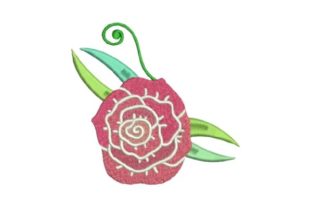
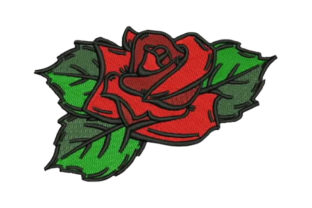
When I opened Rose Tattoo Art Style on my embroidery software, I immediately felt that familiar spark — the kind that says, “This could be more than just a design; it could be a signature piece.” Visually, it’s not a soft watercolor rose or a delicate heirloom motif. It’s sharp-lined, high-contrast, and carries the confident energy of ink on skin — think bold outlines, intentional negative space, and stylized petal structure. The tattoo art influence isn’t just aesthetic; it translates directly into stitching personality. You’ll see strong satin stitch borders, controlled fill stitch gradients in the petals, and subtle running stitch accents that mimic fine-line tattoo work. It doesn’t try to replicate realism — it celebrates graphic impact.
Real-World Fit: Where This Embroidery File Truly Shines
I tested Rose Tattoo Art Style across several real project types before committing to a client order: a linen apron for a local bakery, a cotton tote bag for a boutique launch, and a baby blanket for a custom nursery set. Its versatility surprised me — but not equally across all applications. On medium-weight woven fabrics like canvas, denim, or quilting cotton, it stitched cleanly and held its shape beautifully. The design’s balanced proportions and moderate detail level make it ideal for mid-size hoops (4x4” to 5x7”), which aligns well with common production setups for small businesses.
For custom apparel, especially sweatshirts and crewneck tees, I recommend using a light- to medium-weight cutaway stabilizer — the outline density holds up well against knit stretch, and the clean lines read clearly even at 3–4 inches wide. On tote bag design applications, it anchors the front panel with confident visual weight without overwhelming the fabric. As a pillow cover or kitchen towel motif, it adds artisanal flair without looking overly fussy — exactly what handmade shop owners need to differentiate from mass-produced decor.
What to Watch For: Practical Embroidery Notes
Like any strong graphic embroidery file, Rose Tattoo Art Style rewards attention to detail before stitching. Here’s what I learned the hard way:
- Hoop size matters. While it scales well, shrinking it below 3 inches risks losing definition in the inner petal lines and fine stem details. Always confirm your intended hoop size matches the designer’s recommended minimum — check the Creative Fabrica product page before downloading.
- Stitch density is moderate — not sparse, not aggressive. That means it works reliably on stable fabrics, but on highly textured or loosely woven materials (like burlap or heavy terry cloth), consider adding a tear-away topper for smoother coverage.
- Dark fabric demands contrast testing. I ran a test on black cotton twill with standard rayon thread — the outer outline popped, but inner shading faded slightly. Switching to matte black thread for the fill and bright white for the outline solved it instantly. Always test thread colors on your actual fabric.
- Caps and curved surfaces? Proceed with caution. The design wasn’t built for cap hoops — the tight curves distort fine line work. Save it for flat or gently contoured items unless you’re willing to manually adjust underlay or reduce density.
Commercial Use & Customer Impact: More Than Just a Pretty Stitch
As an Etsy seller and commercial embroidery provider, I judge designs not just by how they stitch — but by how they sell. Rose Tattoo Art Style consistently elevates perceived value. Customers describe it as “gallery-worthy,” “uniquely personal,” and “not something you’d find at the mall.” That perception directly supports higher price points for personalized gift offerings — especially for milestone moments like weddings, anniversaries, or new parenthood. On nursery decor or baby blankets, its edgy elegance bridges modern and timeless, helping handmade product listings stand out in crowded feeds.
Photography benefits too: the bold outlines and clear tonal separation make it easy to capture crisp, scroll-stopping product shots — no heavy editing needed. And because it reads so strongly as intentional design (not clipart), it reinforces brand consistency across collections — whether paired with other tattoo-style motifs or used solo as a hero element on a handmade product.
Thoughts on Licensing & Finished Product Integrity
This is critical: Rose Tattoo Art Style is a machine embroidery design, not an applique design or printable. Its strength lies in precise digital execution — not improvisation. Before listing finished items for sale, always review the licensing terms on the Creative Fabrica product page. Some embroidery files permit unlimited commercial use of stitched products; others restrict resale volume or require attribution. Since the description states it’s meant for use on “any type of fabric,” it’s likely optimized for broad application — but never assume. Verify first.
Final Verdict: A Reliable, Character-Driven Design Asset
If you’re curating design assets for a growing embroidery business — whether you’re screen-printing alongside stitch work, launching an Etsy shop, or supplying local boutiques — Rose Tattoo Art Style earns its place in your library. It’s not a novelty; it’s a workhorse with personality. It performs well across common substrates, photographs beautifully, and resonates emotionally with buyers seeking authenticity in their custom apparel or embroidered patch collections. It fits naturally within the Baskets category not as filler, but as a statement-making anchor — especially when paired with coordinating botanical or minimalist motifs.
Just remember: no embroidery file replaces craft judgment. Always test on scrap fabric, inspect small details post-stitch, and match stabilizer choice to your fabric’s behavior — especially for commercial embroidery where repeat quality is non-negotiable. With those practices in place, Rose Tattoo Art Style delivers consistent, professional-grade results that support both creative integrity and business growth.